Endonasal Cranial Adjusting with a Balloon
Are you a candidate for cranial adjusting?
Endonasal Cranial Adjusting has been done with a balloon since the 1940’s. However cranial adjusting itself dates back to the time of Hippocrates. What the pioneers knew science has just proven. That your skull is not one solid bone. It is made up of 22 bones that fit together like pieces in a jigsaw puzzle. These bones or plates move at the joints or sutures and they can misalign or become fixated. 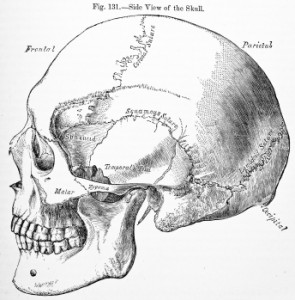 Due to outside forces such as a fall, getting stuck in the birth canal, dental or orthodontic work, dehydration with poor postural habits or emotional trauma, the skull bones can lose their intended shape. Fortunately, Endonasal Cranial Adjusting can free up your skull bones. The technique used by Dr. Fields is a cumulative adjusting process which allows your brain the room it needs and your nasal passages the opening they need. As a result, brain function and airflow are optimized with Endonasal Cranial Adjusting.
You will first be interviewed to see if you are a likely candidate. A thorough history of your heath status will be taken. Your exam will consist of a neurological, muscular, adhesion, cranial suture and nasal evaluation to determine your individual misalignment pattern.
You will receive specialized muscle work and the Endonasal Cranial 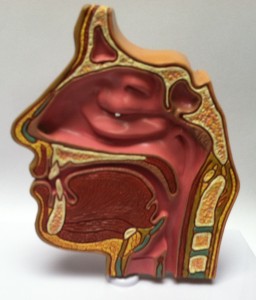 Adjustments. Adjustments are done with an endonasal balloon which is inserted into one or a combination of your six nasal passages (yes, you have six passages, or meatus). The balloon’s size and depth is all determined by your specific misalignment pattern.
On certain occasions, you may receive soft tissue work inside your mouth. There may be pressure point work on the pterygoid muscles, cranial adjusting on the roof of your mouth, the Modified Muncie Technique for Eustachian tube dysfunction or other modalities to support your healing.
See the video above for a demonstration of Endonasal Cranial Adjusting as well as testimonials.
About Chiropractor Dr Adam Fields
Dr Adam Fields is a practicing chiropractor in the Bay Area in Northern California and helps people daily in his office with many challenges that can be helped by shockwave therapy from tendinopathies, arthritis, cartilage regeneration, post surgical scar tissue, pelvic pain, altered biomechanics and more. He uses Endonasal Cranial Adjusting, the Muncie Technique, Extracorporeal Shockwave Therapy (ESWT), Class IV Laser Therapy, posture correction, lifestyle modification, muscle work, and other techniques to help his patients.
Frequently Asked Questions about Endonasal Cranial Adjusting
How long have doctors been performing cranial adjustments?
The use of a balloon in endonasal cranial adjusting came about in the 1940’s. Cranial adjusting itself, however, has been practiced for centuries. From India to ancient Egyptians to the Paracus culture in Peru (2000 BC to 200 AD) many cultures around the world have seen the value to cranial adjusting. Even Hippocrates (400BC) wrote of the skull bones misaligning at the joints or sutures.
In 1947, an individual by the name of Janse J. published the first known version of a balloon assisted cranial adjustment describing the pressurized Nasal Specific Technique. In 1951 and again in 1954,FinnelFLpublished work that described the operation and function of the nasal balloon.
The practice and awareness of Bilateral Nasal Specific was further developed by Dr J. Richard Stober from the mid 1950’s until his passing in 1988. Dr. Stober was based in Portland, Oregon USA, he taught the affect and practice of Bilateral Nasal Specific at both the Western States Chiropractic College and the National College of Naturopathic Medicine.
One of Stober’s students Dr. Dean Howell has taken the practice of Bilateral Nasal Specific to the next level and practices today using the same method as the base for his treatments. Howell calls this Neurocranial Restructuring or NCR and is based out of the state ofWashington,USA.
Aren’t the skull bones fused after childhood?
One of the world’s leading researchers and teachers of cranial movement is John Upledger, DO. In the mid 1970’s Dr. Upleger and his research team at Michigan State University studied recently deceased individuals using radio waves, electron microscopes, and the new cinematographic x-rays to prove the theories that the bones of the cranium actually do move. If there is a lack of movement it is actually a pathological condition.
Dr. Upleger proved, through science, that the bones of the skull have movement.
Recently, original research on live monkeys and sections of human skull (containing sutures) demonstrated objectively that the cranium moves in a rhythmical manner. Additionally, the sutures in a healthy adult, when viewed under high powered microscopes, rather than being fused and filled with calcified tissue are patent or open and contain connective tissue, nerve tissue and blood vessels. If they are calcified and closed it is a result of injury and leads to decreased brain function and many conditions.
There are 22 bones in the skull (not including the jaw or the bones of the ear). They meet at the suture lines or joints. At birth the bones are not fully formed and are in fact quite far apart from one another. As a baby is squeezed through the birth canal, the bones slide over one another and re-expand afterwards to resume their normal positions. As the bones gradually grow to approximate one another they remain in constant motion. This movement keeps the sutures patent (open). The amount of movement is very tiny, 1/100th of an inch. Yet misalignments can be much greater than this. This is seen in faces with asymmetries such as one eye higher than another, a jaw jetting over to one side, an unusually narrow face, etc..
For further on this see our cranial research section.
What are neurotransmitters and how can that play a role in my healing?
A neurotransmitter is any of several chemical substances, as epinephrine, serotonin, GABA or acetylcholine that transmits nerve impulses across a junction or synapse to another nerve, muscle, gland, etc. In the brain neurotransmitters help nerves talk to one another. These chemicals flow across the gap between adjacent nerves as well as circulate through the cerebrospinal fluid.
As an example of neurotransmitters in the pharmacological industry, people with depression are treated with drugs that increase the neurotransmitter serotonin. This can provide a temporary bridge over a troubled time. However, the problem is that bombarding an incredibly delicate and well balanced system with external chemicals on a long-term basis is bound to create unpleasant side effects. Besides weight gain, anxiety, sexual dysfunction, violent behavior and suicide, the person is often more apt to an increase in the depression that they started with.
Is it possible that these people may just have a problem distributing the neurotransmitters that they already have in their brains? In fact, with endonasal cranial adjusting pressure is relieved from the brain and cerebrospinal fluid is allowed to transport chemicals to where they are needed. The proper distribution pattern is gradually brought back to where it was when the skull was much younger. The results I have had in my office helping people with depression, memory, psychosis, stress relief, learning disorders, anxiety and many others speak to this outcome.
Is there anything I can do to make my treatment more affective?
Drink Plenty of Water: During this treatment you will have an endonasal balloon inside your nasal cavity. The amount of water in your system will affect the hydration of your mucosal lining. This hydration will result in the inside of your body being more lubricated an receptive to the treatment. It should follow that coffee, tea and alcohol should be avoided as much as possible as they are diuretics and will take water out of your body leaving your linings, joints, muscles, etc. dehydrated. A good formula for proper water consumption is as follows:
Take your body weight in pounds and divide that number by 2. That number in ounces is good for a daily intake of water. So, if you weigh 100 pounds you should shoot for 50 ounces of water per day.
Perform Self Massage: Facial massage can be a great adjunct to cranial adjusting and you will receive specific soft tissue work on the days of your treatment. Getting a head start on this can include massaging your temples, above your eyebrows and on either side of your nose.
Move your body: If it is feasible, participate in activities which move your body. The skull and brain are not the only parts of your body that will be affected from endonasal cranial adjusting. Your posture including pelvis alignment, feet alignment, spinal positioning and the overall balance of the body will be more optimal. To gain the maximum benefit try to walk, do yoga, go to the gym, take a Pilates class or just rock in a rocking chair if that is all your body affords. Movement is your friend and is your partner in optimizing your treatment.
How often do I need treatments?
Research is showing that it is optimum to receive a series of visits that are close together. This way the benefit gained on the first visit will be held open and taken even further on the second visit, etc. Generally, that means that you will be seen 4 or 5 days in a row, take two weeks off and come in for a follow up. That is one series. After these treatments it is nice to have a two week rest from endonasal adjusting. Often, people have good results with one or two series of care. To continue at a rapid rate of change and for cumulative improvements, series can be continued at this rate.
For those of you who are coming in from out of town and can only be here for three days we may do two treatments in one day. Please see our “Coming in from out of Town?” section for local hotels and airport information.
You can continue care until you feel you are resolved or you can continue care until Dr. Fields has thoroughly tested your cranial bones and nervous system to be optimal.
Does the process hurt?
The first part of the work is deep tissue massage. This can be quite uncomfortable but by giving Dr Adam Fields feedback along the way, the pain can be minimized will efficacy maintained.
When the endonasal balloon is inserted into your nasal passageway, there may be a slight discomfort. It is more likely, however, that it just feels strange. Most likely, you have not had something like a balloon up your nose but you will make peace with that feeling very quickly. Some have described the placement of the endonasal balloon into the nostril as getting water up the nose. As ambiguous as it may sound, I think it just feels weird.
When the finger cot/balloon is inflated, it fills up the nasal passageway pushing on the nasal walls to open up the airways. As the pump device used to inflate the balloon is squeezed the endonasal balloon enlarges and moves its way through the nasal passageway. When this is going on there can be popping, clicking and cracking sounds coming from your skull. (Each inflation takes approximately 3 seconds) These are from the plates shifting and in most cases there is no pain at this point. In rare cases there will be pain. However, the dominant feel is surprised followed by relaxed.
Please note that each visit will be easier and easier to handle and you will be rewarded with better breathing and greater health. For patient testimonials on the procedure please go to our cranial video.
If I recently fractured my nose can I still receive treatment?
I recently fractured my nose can I still receive treatment? Many injuries are diagnosed as fractures but may be displaced nasal bones. X-ray confirmation is needed for a definitive diagnosis. If the bones are displaced rather than fractured then cranial adjusting is indicated immediately to set the nose into a proper alignment. However, in the event of a fracture a light treatment to set the fracture can be indicated but for the full series I recommend waiting six to twelve weeks before care.
How young can one be and how old is too old for treatment?
The birth process can be very traumatic for the newborn. More than 30 percent of births in theUnited Statesare performed by c-section. Many also use forceps and vacuum extraction methods to aid in delivery. Vacuum extractions can double the rate of intracranial hemorrhage as compared to a normal vaginal delivery. Forceps deliveries also increase the risk of injury during the delivery. Cranial and spinal misalignments can follow and impair a newborns ability to function at 100%. Thus, a careful cranial treatment on a child may be indicated and may help them considerably.
On the other side of the age spectrum are senior citizens. Seniors have had a lifetime of possibilities for cranial misalignments. They often have what has been called “senior moments”. Many suffer from sleep apnea and many other conditions that could be helped by well moving cranial bones and a brain that is being nourished by cerebrospinal fluid. I have performed and seen results by performing endonasal cranial adjusting on people up in their eighties and nineties. This may not be the case for everyone but one woman had not said a coherent sentence in 6 months due to severe dementia and had some very clear communication post treatment. Before accepting you maladies as just “old age” come in and have your cranial bones checked for misalignment. You may be well amazed by your positive results.
Preparations for Endonasal Cranial Adjusting
There are many variations of Endonasal Cranial Adjusting. Some perform “Binasal Specific”, Dean Howell is a leader in “Neurocranial Restructuring” or NCR, “Nasal Cranial Release Technique”, “Nasal Specific” and “Functional Cranial Release” are yet two more. All are done with an endonasal balloon connected to an inflation device yet all are slightly different. Dr Adam Fields has studied under more than one of the current techniques and, thus, uses the generic “Endonasal Cranial Adjusting”. Regardless, here are some pointers to keep in mind before your first treatment series.
Drink Plenty of Water
Perform Self Massage
Read Possible Effects and Get off of any Drugs on List Below
Drink Plenty of Water
During this treatment you will have an endonasal balloon inside your nasal cavity.  The amount of water in your system will affect the hydration of your mucosal lining. This and the rest of your body need to be well lubricated for maximum results. It should follow that coffee, tea, alcohol should be avoided as much as possible as they are diuretics and will take water out of your body leaving your linings, joints, muscles, etc. dehydrated. A good formula for proper water consumption is as follows:
Take your body weight in pounds and divide that number by 2. That number in ounces is good for a daily intake of water. So, if you weigh 100 pounds you should shoot for an average of 50 ounces of water per day.
Perform Self Massage
Facial massage can be a great adjunct to endonasal cranial adjusting and you will receive specific soft tissue work on the days of your treatment.  Getting a head start on this can include massaging your temples, above your eyebrows and on either side of your nose. Special attention should be given to the suboccipital area (where the back of your head meets your neck). It must be noted that when you receive deep tissue muscle work in our office some discomfort and sore muscles may arise.
Possible Unwanted, but not Necessarily Unhealthy, Effects
You may have effects that are not what you expect but this treatment is by in large very safe.
– Many people will have discharge from their sinuses immediately following the treatment, which may cause temporary throat irritation.
-On rare occasions, nose bleeds occur. A list of your over the counter and prescription medications must be shown to Dr. Fields to see that they do not contain aspirin or other anti-platelet/ blood thinning drugs. If it is determined that you are on such a drug, you must consult your MD to get off of these drugs for at least 5 days prior to receiving a cranial adjustment. Please scan our list of medications containing Aspirin and other anti-platelet drugs.
– Shifting in the cranial bones can result in temporary head, facial or teeth pain. This generally subsides in minutes to a few hours.
– Patients may experience a temporary worsening in their symptoms.
– Emotional releases are possible during treatment and are nothing to be ashamed of.
– After treatment the fit of glasses may need to be altered. Ear pieces may no longer fit as they did before when the facial bones are put back into alignment.
– In rare instances the nasal balloon may become twisted and will need to be ruptured before removal or self-rupture may occur.
THE FOLLOWING MAY BE CONTRAINDICATIONS FOR THIS CARE:
Bleeding/clotting disorders, prior nasal or facial bone surgery where the bone has been thinned, severe osteoporosis, recent fracture (nose, face, neck), current brain tumor and brain aneurysm
A to Z List of Medications Containing Aspirin and Other Anti-Platelet Drugs
A.P.C., ACA CAPs & No. 2, ACD, Acetabar, Acetasam, Acetidine, Acetonyl, Acetycol, Acuprin, *Aggrenox, Aidant, Alka Seltzer, Allylgesic, Allylgesic w/ergotamine, Alprine BiTabs, Aluprin, Amsodyne, Amytal w/ASA, Anacin, Anahist, Analval, Anexais w/codeine, Anexsis-D, Anodynos, Ansmco No. 1&2, APAC, Apancad, APC, Aphodyne, Aphophen, Arthra-Zepe, Arthropan liquid, ASA Enseals, ASA Suppositories , As-ca-phen, Asalco No. 1&2, Ascaphen, Ascaphen, Ascodeen-30, Ascriptin, Aspadine, Aspergum, Aspermin, Asphac-G, Asphencaf, Asphyte, Aspir-C, Aspir- Lox AD, Aspir- Max IB, Aspir-phen, 4-Way Cold Tablets, A.P.C., ACA CAPs & No. 2, Aspirbar, Aspireze, Aspirin, Aspirocal, Aspirtab, Aspivite, Aspodyne, Aspridrox, Axotal, Azdone, B-C Powder, BA-C Tablets, Baby Love, Back-Quell, Ban-O-Pain, Bayer, BC Cold, BiAct cold, Pepto Bismol, Bristamin APC, Brogesic, Bufabar, Buff-A, Buff-a-Comp, Buffacetin, Buffadyne, Buffaprin, Buffasal, Bufferin,Buffets II, Buffex/Buffinol, Butal, Butalbital, Butinal, Calurin, Cama, Cama Inlay, Capathyn, Captron, Cardioprin, Cartia, Causalin, Cephalgesic, Characol, Cirin, Clistanal, Co-ryd, Codasa, Codempiral 2&3, Codesal 1&2, Coldate, Colrex, Congesprin, Cope, Coralsone, Cordex, Coricidin, Covangesic, Cyclopal, Damason-P, Daprisal, Darvo-Tran, Darvon 32&65, Darvon ASA, Darvon-N ASA,Dasikon, Dasin, Dasprin, Decagesic, Decolyn, Decotussin, Defencin, Delenar, Demerol APC, Derfort, Derfuln, Dilotab, Dolcin, Dolene 65, Dolor, Doloral, Dorodol, Drinscet, Dristan, Drocogesic #3, Duopac, Duradyne, Durageuic, Easprin, Ecotrin, Emagrin, Empiral, Empirin, Emprazil, Endolin, Enterfilm, Epragen, Epromate, Equagesic, Equazine, Excedrin, *Feldene, Fiorgen, Fiorinal, Fizrin, Fornasal, Galsodyne, Gelprin, Gemnisyn, Genaced, Genacote, Gennin, Genprin, Gensan, Gillodyne, Goody’s, Halfprin, Halprin, Hasacode, Hasamal CT, Henasphen, Hepto-M, Histadyl & ASA, Hydrodyne, Hypan, I-PAC, Isollyl, Kryl, Liquiprin, Lumasprin, w/Hyoscyamus, Magnaprin, Magnesium Salicylate, Marnal, Margesic, Massurin, Medadent, Medaprin, Mepro Aspirin, Mepro Compound, Meprogesic, Micranin, Midrin, Momentum, Monacet compound, Methocarbamol ASA, Multihist & APC, My Luck Effervescent, Nembu-Gesic, Nembudeine, Neogesic, Nipirin,Norgesic, Novahistine w/APC. Novrad w/ASA, Norwich,Nuhist w/APC, Opacedrin, Opasal, Paadon,Pabirin, PAC,Pain-Aid,Palgesic, Panodynes Analgesic PC-65, Pc-Cap, Pedidyna, Pentagesic, Pepidynel, Pepto Bismol, Percobarb, Percobarb-Demi, Percodan , Persistin, Phac, Phenaphen, Phenaphen w/codeine, Pheneasal, Pheneaset Improved, Phenergan compound, Pheno-Formasal, Phenodyne, Phensal, Pirseal, Plavix, Precomp, Prediasl, Presalin, Prolaire-B, Propox 65, Propoxyphene, Propoxyphene Compound, Pyhist Cold, Pyrasal, Pyrroxate, Quiet World, Rhinex, Rhinocaps, Riona, Robaxisal, Roxiprin, Rumacol, Ryd, Sal-Aceto, Salabuff, SalatinSaleto, Salibar Jr., Salipral, Salocol, Sarogesic, Sedagesic, Sedalgesic, Senaldyne, Sigmagen, Sine-Aid, Sine-Off, SK-65, Sloprin, SodolSoma Compound, Spirin Buffered, St. Joseph ASA, Stanback, Stero-Darvon w/ASA, Supac, Suprin, Synalgos, Synirin, Talwin Compound, Tampogen, Tenol Plus, Tetrex-APC w/Bristamin, Thenylene APC, Ticlid, Toloxidyne, Trancogesic, Tri-Pain Caplets, Triaminicin, Trigesic, Trinprin, Uni – AS Plus, Uni – Buff, Uni – Tren, Ursinus Inlay-Tabs, Valesin, Vanquish, Verin, Wesprin Buffered, Zactirin
“Since I was about ten years old I have suffered with seasonal  allergies. I used over the counter and prescription medications. With all of them, my body would build up a resistance to them and I would suffer. I began to receive steroid shots in my nose to treat the problem. It began with one time per year, then two times per year until I received the cranial adjustments from Dr. Fields. Once I received the cranial adjustments in 2007, I have not had any seasonal allergy problems!! No shots. No medication. And this has lasted for years now.” – Lisa Higdon, San Jose, CA
“Since I was 7 years old I suffered from seasonal allergies.  Every day in the spring time I would have a stuffy nose, itchy eyes and constant sneezing. For many years, I took prescription medication and then moved to Allegra. Since having five cranial adjustments, my pollen allergy is gone!” – Dylan F., San Jose, CA
“I finished my first series of cranial adjustments and things are  shifting in a good way. I breathe easier, wake up better and have a sharper mental focus. My left eye was chronically dry and it is improving. Also, I moved back to San Jose 4 years ago and since then I have had bad allergies which make me congested all day. Since the treatments with Dr Adam Fields, I no longer have the allergies!” – Deanna Rosenthal, San Jose, CA
 “I have only had three visits and for the first time in 23 years I can breathe through my nose. My sleep has begun to improve and I look forward to continued treatment.” – Nicole Rancatore, San Jose, CA

“I had dizziness and a loss of balance for more than four years. When playing with my kids I would have to stop due to the room spinning around me. After a series of endonasal cranial adjustments with Dr. Fields the problem is 100% gone. I also have improved mental clarity and better breathing.” – Dr Rich Avila, chiropractor, San Jose, CA
“When I was very young I started to get ear infections. I would  get four in a row and be on antibiotics all the time. My dad says it probably started with my mom’s rough delivery. She was in labor for 24 hours! After seeing Dr Adam Fields only a few times, my ear infections are gone. They lasted 7 years and now it has been over two years now and I have not had one infection since being treated with Dr Adam Fields.” – Gabrielle A., gymnast, San Jose, CA
 “I was diagnosed with Glaucoma and my doctors at Kaiser were very concerned. My Tonometry reading for intraocular pressure (IOP) was 22. This could lead to blindness. After cranial adjustments with Dr. Fields my IOP is down to 16. This is totally normal! Thank you God and thank you Dr. Fields.” – Deacon Brian McKenna, San Jose, CA
 My hearing loss had gotten pretty bad and I thought it was just old age. I mentioned it to Dr Adam Fields on one of our chiropractic appointments and he suggested adjusting my skull with a balloon. We did one series of treatments and my hearing is back 100% in my right ear and 75% in the left. I do not need to have the TV volume up high anymore and “what?” is no longer my most popular word. Thanks Dr Adam Fields!” –Ray Ventura, San Jose, CA
“Since 7 years old, I was tormented with the agony of regular  migraines. They came a minimum of one time per month. Going to school or work would be impossible when I had my migraines. Six months ago I went through two series of cranial adjustments with Dr. Fields and haven’t had a migraine since. What an incredible change in my life!” – Kim Davis, Raleigh, NC
“When I was in 6th grade I cracked my skull open on the side of  a swimming pool. This started a lifetime of daily headaches and regular migraines. When the migraines hit I would lose my vision and be totally incapacitated. I lived on 8 Advil a day and when the migraines hit I would take whatever the doctors wanted to give me. The drugs (A full range of migraine medications) just made me sick. Four years ago, I had a series of cranial adjustments with the balloon from Dr Adam Fields. 37 YEARS OF MIGRAINES AND HEADACHES ARE NOW GONE!” – Therese Valdez, Santa Cruz, CA
“I had nasal blockage for more that 10 years. I lived on  Vicks. My nights were a pure nightmare. I would wake up more that 5 times per night gasping for air. Getting up in the morning it felt like I had been in a battle all night just to get my breath. Dr. Fields did one series of cranial adjustments on me (5 visits) and I can breathe! My sleep is without disturbance. I now wake up refreshed and clear headed. My grand daughter also had great results. Thank you, Dr. Fields!” – Marge Romayor, San Jose, CA
 “After tonsil surgery when I was young, I started to have constant nasal and post nasal drip issues. At age 20 I started having a chronic cough with a feeling of thickness in my throat. From college roommates to family members, everyone around me was concerned. They would constantly tell me I had to get it taken care of. This began a cycle of going to doctors who would say there was nothing wrong with me and people in my life prodding me to go to another doctor. I would try to ignore the whole thing yet wanted a fix.
My primary care doctor on the East coast told me that I had a deviated septum. After doing some research, cranial adjusting seemed somewhat appropriate and I thought I would give it a shot.
I went with Dr Adam Fields partly because I respect the Pettibon System (The technique of chiropractic he practices). He performed one series of cranial adjustments with a follow up two weeks later.
My throat now feels cleared, I do not have the nasal issues and everyone around me is saying, “Hey, you stopped coughing!” – Ravi P., Boston, MA
 “My nasal passages haven’t been this clear since I was a kid!” – Jason Norish, San Jose, CA
 “Since I was a kid I would get a cold and my head would be in pain and misery with a raging sinus infection. I would be out of commission for 2-3 days minimum 4-5 times per year. I would be completely useless. Now, since the cranial adjustments, I bounce back. I don’t even have one day that I am down. I maybe have a slower day but I am fully functional at work. No pain or pressure or issues that I used to have.” – Davorin Skender, Cleveland, OH
 “I suffered continual sinus infections and headaches throughout the year for decades. Immediately after the cranial adjustments I felt like I could breathe through my entire skull. Like I had lungs up in my brain! And I haven’t had a sinus infection in 6 years now.” – Kirk Kintzel, Santa Cruz, CA
 “I had to use Nasonex and Flonase due to chronic sinus infections. After getting my first cranial adjustment I felt so much clearer in so many ways. Dr Adam Fields then gave me two series of cranial adjustments with the balloon. Now, it has been years and I have not had a sinus infection.” – Judy Nelson, Los Gatos, CA
 “I came to see Dr. Fields looking for more energy. I would drag
most of the morning and have severe fatigue in the afternoon. At night my sleep would not refresh but further frustrate me. Since cranial adjusting, I have an abundance of energy, get way more out of my day and sleep well at night.” – Jon Magnussen, Rejkjavic, Iceland
 “I had sleep apnea for as long as I could remember. 10 to 15 hours
of restless sleep per night was a norm for me but I would still feel fatigued throughout the day. Power naps did not work. Recently, I had a series of cranial adjustments with Dr Adam Fields and now I sleep 7 to 8 hours and feel rested. My life has so improved. Thank you Dr. Fields!!!” – Sam Chen, CMT, San Jose, CA
 “For over 3 years I was only sleeping for 4 to 6 hours per night and it was always restless. After my first cranial adjustment I instantaneously began to sleep better. I slipped into a deeper 7 hour sleep. Along with that, the connection between the fast thoughts that come into my mind and the words that come out of my mouth is seamless and synching seamlessly. Dr Adam Fields’ cranial adjustments are amazing.” – Kyle Borchers, San Jose, CA